Farrell spent five years researching and interviewing to write this book. The book is a sociological study of a community where the rich chase beautiful, tax-friendly places and as the author says, “game the system. In most counties in the United States, the population estimates from the census are similar to the number of people claiming residency for tax purposes. Not in Teton County. It has the largest discrepancy between the number of people who actually live there and the number of people who claim to for tax purposes.”
Read MoreI suppose I will claim that the Badlands belong to no one and to everyone: national status should be a shared sense of belonging for yucca, sheep, juniper, rattlesnakes, wolves, coyotes, Cottonwoods, scoria and gumbo, buffalo, wild horses, tourists, golfers, hikers, Cottonwoods, the watercourses, Cottonwoods, historical faith in our country and its hopes, Cottonwoods.
Read MoreIn 2021, I wrote a bit about one of the Badlands’ smaller charismatic denizens, the Ord’s Kangaroo Rat. This time it’s a much larger one, our Bighorn Sheep, its near extinction and recovery. The bighorn had its origin in the Old World during the last ice age. It is in the cattle family, the Bovidae, along with bison, mountain goats and a plethora of other Old World and domesticated species. They crossed to North America via the Bering Straits Land Bridge at the end of the Pleistocene, the oldest North American fossils having been dated at around 110,000 years.
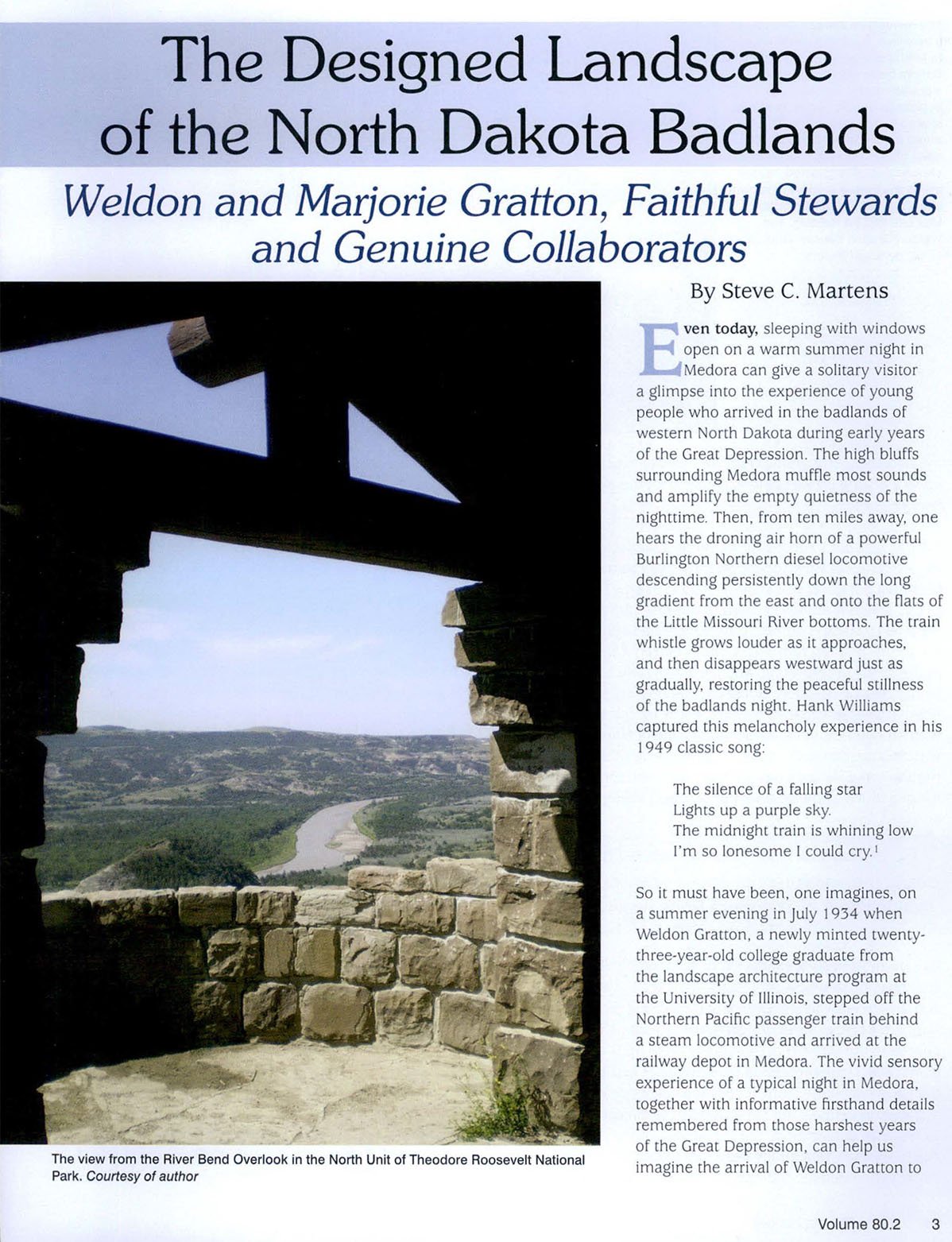
Read MoreRecommended reading: The Designed Landscape of the North Dakota Badlands: Weldon and Marjorie Gratton, Faithful Stewards and Genuine Collaborators, by Steve C. Marten. North Dakota History, v. 80, no. 2, Summer 2015.
Read More“We oppose the use of eminent domain for this or any other project in the Badlands,” said BCA board president Christine Hogan, a retired Bismarck attorney. “Eminent domain is not the spirit of the North Dakota Badlands. Such tactics inevitably create bitterness in the ranch community. If Billings County wants a bridge, they should work to obtain the consent of the ranch owners whose private property would be impacted by the project.”
Read More“In 1999, the United States Forest Service's requirement to review and revise its management plans for the Dakota Prairie Grasslands sparked into life not only a controversy about politics and range management but also once again questions about wilderness in the Little Missouri National Grasslands.”
Read MoreBadlands Conservation Alliance has moved into a dedicated office co-located with other like-minded groups within the Bismarck offices of the ND Natural Resources Trust.
Read MoreBadlands Conservation Alliance, A Voice For Wild North Dakota Places, with a volunteer board of passionate Wilderness enthusiasts, seeks a full time manager to lead our staff-driven nonprofit organization into the future.
Read MoreIn 1964, Congress passed the Wilderness Act "to secure for the American people of present and future generations the benefits of an enduring source of wilderness."
Almost 30 years after the passage of the act, the promise is yet to be fulfilled. North Dakota is one of only three states that has not passed a comprehensive statewide U.S. Forest Service wilderness bill. Meanwhile, the amount of wilderness in the state that qualifies for protection is rapidly diminishing.
Read More