
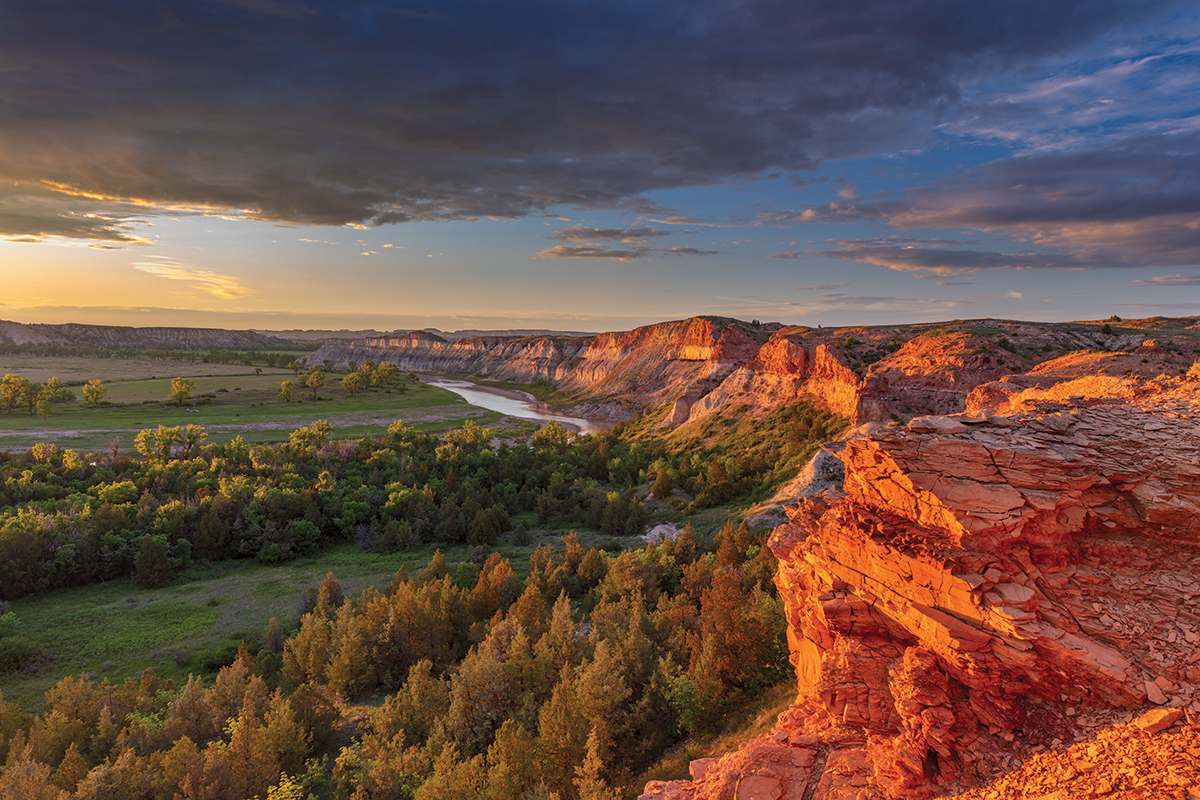
Welcome
From the President of the Badlands Conservation Alliance
In this year in which we celebrate the 250th Anniversary of the United States it is important to reflect on those that brought us to this date, our forefathers as well as the ancient ones that came before. The Badlands have nursed and created great leaders—Sitting Bull, Four Bears, Teddy Roosevelt, Sakakawea, Harold Schafer, our parents, grandparents and ancestors. To them the Badlands mattered as much as this geologic wonderland does to us, the membership of Badlands Conservation Alliance.
It is a unique place that has inspired many. A place that continues to amaze most people who wander the grasslands that are broken by wooded draws and clay buttes. It provides habitat for wildlife and livestock; it is a hiking and biking challenge for the recreationist; a place to hunt big game; a place for an artist to place an easel; and, a place to find peace. It was here that Roosevelt came back to in order to gather his wits and to gain stamina after the loss of his wife and mother who died on the same day. This special place needs to be preserved in a pristine state. Large portions of the National Grasslands in western North Dakota are being damaged. We hope that what little is left can be maintained. It is important to have owner operated ranches and farms along the river bends and grazing the grassland; and, intermixed public lands are necessary so others can continue to enjoy the quiet and peace enjoyed by those that came before us. It has worked for generations. It needs to continue.
Our mission and hope for this region is described briefly in this document. Please consider helping us preserve this sacred place by becoming a member/donor. Our mission is to continue “to be a voice for wild North Dakota places”. We need your help.
Sincerely,
Bill Knudson
President
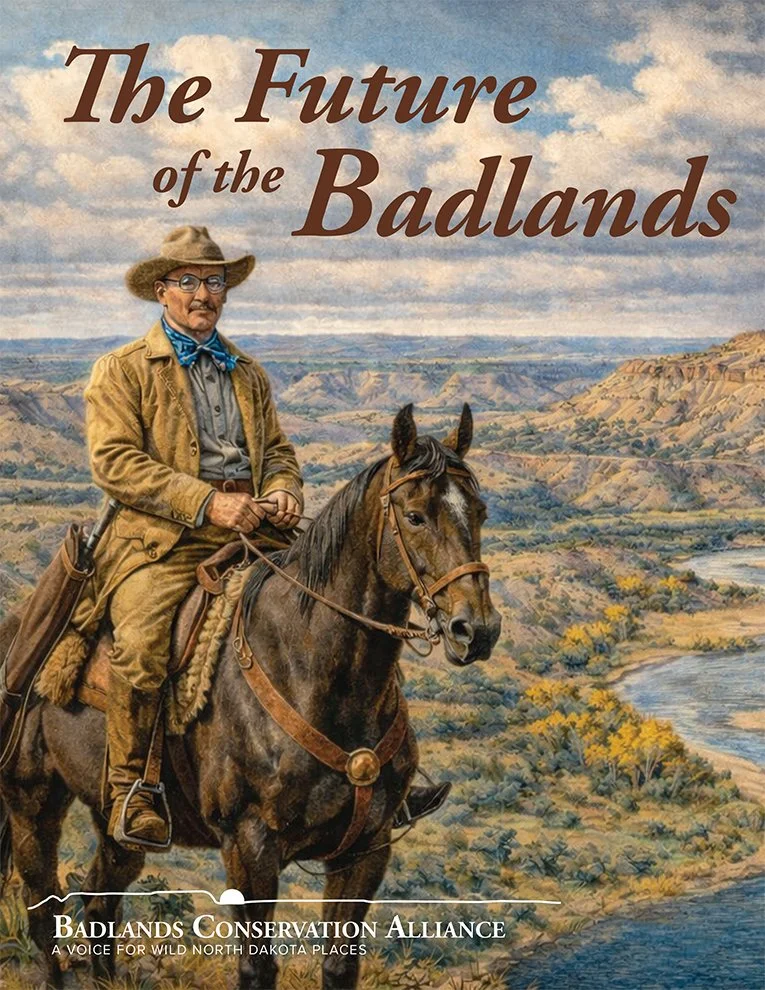
Why the Badlands Matter and Why We Must Protect Them
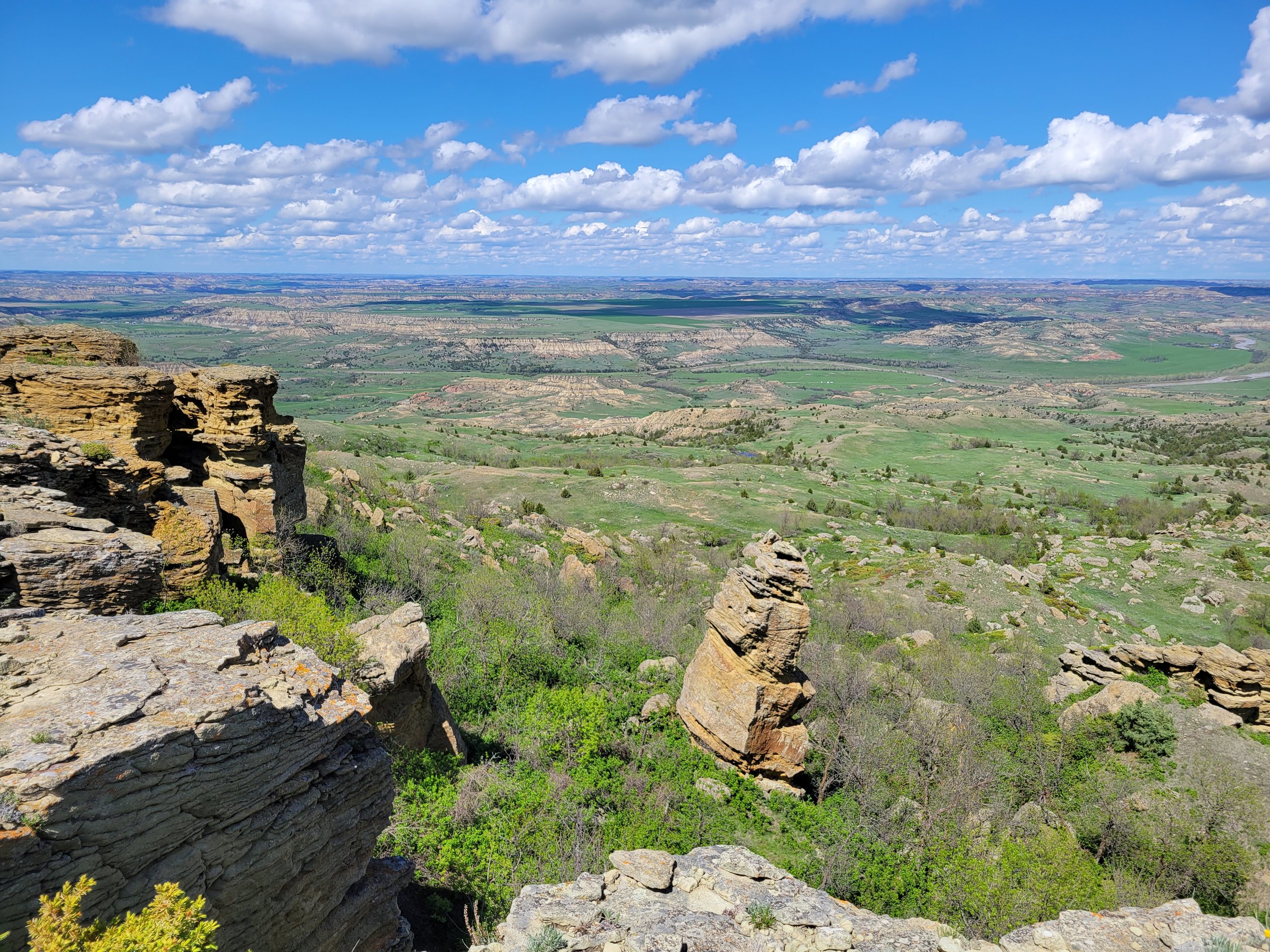
By Clay Jenkinson
“It was here that the romance of my life began,” said Theodore Roosevelt on a whistle stop in Medora, North Dakota, on the evening of September 3, 1901. We of the Badlands Conservation Alliance (BCA) get it. We feel that romance too, and we are determined to protect the Badlands from industrial degradation and gross economic extraction.
Every great landscape in the public domain of the United States needs a vigilant advocacy group. We are that entity for the North Dakota Badlands. Our ethos is civility and constructive engagement, not environmental absolutism.
In the autumn of 1883, when he was just 24 years old, kid Roosevelt—still not fully formed—wanted a taste of the last of the American Frontier before it was too late. The Northern Pacific Railroad delivered him to the heart of the Badlands in September 1883 when white occupation and settlement were just getting underway, trailing thousands of Texas longhorns. Roosevelt came to kill a buffalo—and did so after a long frustrating hunt that would have defeated a lesser man—but while he was out playing wilderness hunter in designer buckskins, Roosevelt fell in love with the Badlands: a stark and broken landscape with layer cake striations, including lignite coal veins, pyramidical buttes, clays baked into red ceramic outcrops by burning coal veins, a jumble of sometimes magical, sometimes eerie ridgelines, bluffs, coulees, sandstone outcroppings, hoodoos, bentonite hill caps, and lush benchland bottoms of grass. Best of all (a serious distinction from America’s other Badlands), a river runs through it, winding its way along all of this starkness by way of leisurely s-curves and an ever deepening cut: the Little Missouri, North Dakota’s only official “State Scenic River,” running north from Devils Tower (soon to be President Roosevelt’s first National Monument) through bits of Wyoming, Montana, and South Dakota before it begins to carve true Badlands somewhere north of Marmarth, North Dakota.
The Badlands did more than anything else to fashion the strenuous and reckless-adventure-seeking Theodore Roosevelt of American memory. And to fashion, too, America’s greatest conservationist. Here the fragile New York dude and dandy (Teddy) became the mounted cowboy and big game hunter, America’s most strenuous President TR or (Theodore Rex). Rushmore Roosevelt. Roosevelt in turn changed the face of the American West forever (we hope) by using his two terms as President to set aside 230 million acres of the public domain for permanent protection from adverse economic activity. What he said on the south rim of the Grand Canyon on May 6, 1903, might as well be the mission statement of the North Dakota Badlands:
“Leave it as it is. You cannot improve on it. The ages have been at work on it, and man can only mar it. What you can do is to keep it for your children, your children’s children and for all who come after you, as one of the great sights which every American, if he can travel at all, should see. We have gotten past the stage, my fellow-citizens, when we are to be pardoned if we treat any part of our country as something to be skinned for two or three years for the use of the present generation, whether it is the forest, the water, the scenery.”
Every member of the Badlands Conservation Alliance regards this as Gospel. It is fitting that in 1947 the U.S. Congress made Roosevelt’s beloved Little Missouri River the location of a three-unit National Park in his honor. On every question of development that would mar the magic of the North Dakota Badlands, we ask ourselves, what would TR think, what would TR declare, what would TR do?
As America reaches its 250th birthday, there are greater pressures on the Little Missouri River Valley than ever before: oil extraction, gravel mines, new service roads, the threat of a bridge near Roosevelt’s Elkhorn Ranch site, an illegal bridge thrown up east of the North Unit of Theodore Roosevelt National Park, ridgeline housing development, municipal growth in the village of Medora, and a splendid new national presidential library that will draw hundreds of thousands of new visitors to the Badlands, some of whom will want a piece of it. This is a time for intense vigilance. The Badlands Conservation Alliance is the one entity solely dedicated to the romance of the North Dakota Badlands.
We invite you to join us.
Of course, we accept the facts of this place we love. Mineral extraction is permitted on everything not embraced by the three units of Theodore Roosevelt National Park. Cattlemen have federal leasing rights all up and down the Little Missouri Valley. Some of the water of the Little Missouri is diverted for irrigation and some, unfortunately, for oil development. The recreation industry has discovered the Badlands. The Theodore Roosevelt Medora Foundation exists to provide a range of amenities and entertainments to those who venture here, with growth as its ethos. We do not oppose the multiple uses permitted by law in the Badlands. We are friends to the heritage ranch community.
But we want to insist that these activities show genuine respect for the magnificence of this place, its uniqueness among American landscapes, its intense historical heritage—Sitting Bull, Custer, Roosevelt, the French nobleman the Marquis de Mores and his artistic wife Medora—and above all its fragility. Economic development needs to tiptoe through the Little Missouri River Valley on special alert, with a true reverence for all that remains and all that could be lost.
We believe in peaceful and harmonious co-existence. But there are limits to how much economic activity the Badlands can absorb without being turned into a degraded and commercialized industrial theme park. North Dakota has many remarkable landscapes, characterized by subtle beauty, for most an acquired taste. But once you drop down into the Badlands from east or west, from Belfield or Beach, ND, a forty-mile-wide sliver of terrain becomes as stunning and dramatic as any scenic wonder of the American West.
Fully 95% of North Dakota is privately owned and, therefore, open for business. Surely it is in our local, state, and national interest to save a bit of what’s publicly owned, the most extraordinary fragment of North Dakota—for seed! For physical adventure and spiritual renewal. For escape from the noise and frenetic pace of city life. For daydreaming and stargazing far from urban light pollution. For watching bison snort and graze, a herd of pronghorn antelope hurtle across an entire viewshed for no good reason, raptors work the thermals for hours, and a thunderstorm beginning to crawl in from over the western horizon. For sitting on a gravel bar in the Little Missouri River on a dry hot August afternoon.
In the springtime, when the snow has mostly cleared, even before the grass begins to green up, the heartbreakingly lovely and delicate pasqueflower (locally known as the crocus) blooms for a few weeks. It is worth driving from Bismarck or Minot or even Fargo, ND, to see the crocuses in their fragile lavender or mauve glory, but the observation window is brief. In April or May the Little Missouri River rises for a few weeks and occasionally tops its banks—in most years the only time you can float the river in kayaks and canoes. In May and June, and sometimes extending into early July, the grasslands burst forth almost garishly green, Ireland green. Wildflowers proliferate. There is water in the creeks and a super-abundance of cattle fodder. For all the ungulates (cattle, bison, elk, horses, deer) it’s summertime and the livin’ is easy. Around the Fourth of July, the grasses begin to fade into pastel. They become tawny and soon enough, brittle. The Little Missouri settles into its characteristic minimalist flow. The sandbars and gravel bars appear as the water recedes. In a dry summer there are places where the river is almost intermittent, and in no place is it more than waist high. Then comes the autumn when the cottonwood trees turn bright yellow-gold as if overnight. Their brilliant incandescence, coupled with the softer autumnal sunshine, makes the Little Missouri much bluer than its siltload would seem to justify. There are moments in the fall when the threaded sinewaves of yellow cottonwoods along the river are as overwhelming as the Aspens of Colorado in October.
Roosevelt called winter in Dakota “a season of iron desolation.” Even now, visitation plummets to near-zero. For four or five months you can have the whole valley to yourself (but bring mittens). The Badlands are ideal winter shelter for beef cattle. Everyone hunkers down. The ranchers read Zane Grey.

“The Badlands are enchanting in all of their moods.”
The North Dakota Badlands are supervised by a trio of (sometimes overlapping) entities: the three units of Theodore Roosevelt National Park protect 70,466 acres in the heart of the Badlands, on both sides of the Little Missouri River. The national park is wonderfully enveloped by the largest unit of the National Grasslands system in America, the 1.2 million acre Little Missouri National Grasslands, which stretch from the South Dakota state line all along the sinuous Little Missouri River to the shores of Lake Sakakawea. The remainder of the lands in the Little Missouri Valley are privately owned by heritage ranchers. Thanks to the generosity of New Deal Dust Bowl legislation, ranch families are permitted to lease all the acreage they need of the Little Missouri National Grasslands. Lightly supervised by the U.S. Forest Service, the ranchers of the valley participate in self-governing Grazing Associations to ensure responsible stewardship. The Little Missouri National Grasslands serve TR National Park just as the “Greater Yellowstone Ecosystem” seeks to extend some of the protections of Yellowstone National Park beyond its artificially circumscribed square boundaries. It’s important to Theodore Roosevelt National Park that it has a wide public lands buffer.
It’s America’s public land. You are part owner of 1.21 million acres of well-protected federal grassland, surrounding 70,000 more acres of strictly protected national parklands, and you are welcome on all of it. There are scores of hiking trails and a good number of campgrounds up and down the river. There are 29,900 acres of designated wilderness in the national park, off limits forever to wheeled vehicles (or pesky drones). There is no day when you cannot see a buffalo or a feral horse in TR National Park, and on most days throughout the calendar year you can have the American West more or less to yourself if you just walk a few hundred yards away from the roadway.
You can now hike, bike, or horse trail much of the Badlands along the 144-mile Maah Daah Hey Trail that extends from the Burning Coal Vein Campground 30 miles south of Medora to the old CCC camp 16 miles south of Watford City. This solves the problem of hiking across private property. Outback bicyclists come from all over the world to scramble the Maah Daah Hey. There are appropriately primitive way stations all along the trail.
It would be a tragedy to desecrate this magical terrain and the river that feels sacred to all who love it. We must not skin this place, too. Our job in the Badlands Conservation Alliance is to serve as a responsible watchdog and champion of the North Dakota Badlands. If we don’t do it, who will? The forces of economic development apparently do not sleep. The world is discovering the North Dakota Badlands and their intentions are seldom gentle.
Nor can we sleep much when we are flat on our backs in our sleeping bags somewhere in the Badlands trying to fathom the stars and the mystic depth of time on a summer night when the sunset lingers forever and the coyotes begin to yap and croon. Watch for meteorites and listen to the low whisper of the Little Missouri as it makes its way to the mighty Missouri proper.
What would Theodore Roosevelt do? We think you know.
Clay Jenkinson
The Threat to the Badlands
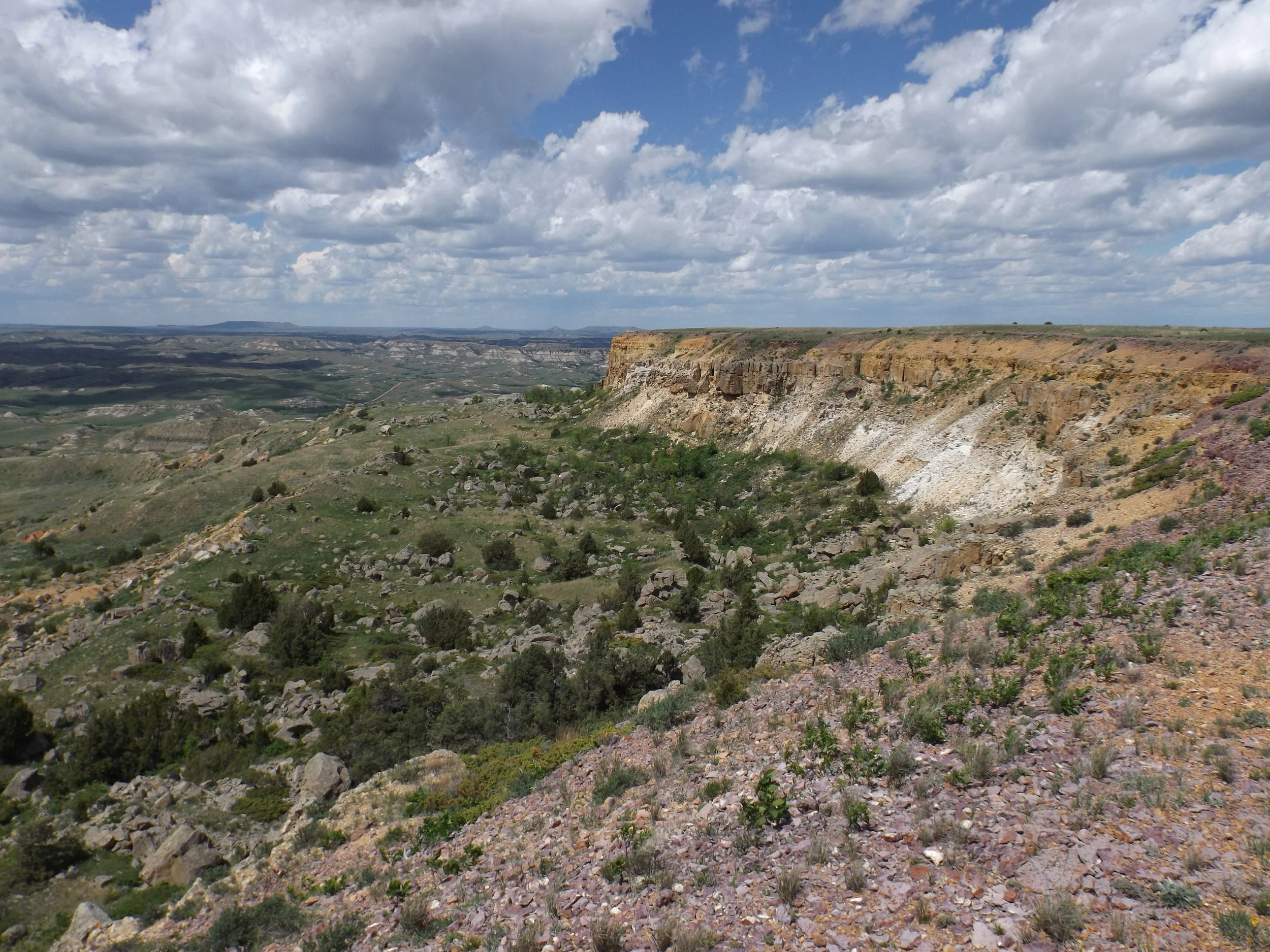
It was the practice of our friend, and Senior Advisor to the Badlands Conservation Alliance, Valerie Naylor, when she was Superintendent of Theodore Roosevelt National Park to create an annual list of threats to the park she supervised. Now, at a time when there are unprecedented pressures on the North Dakota Badlands, from directions we could not have foreseen, we of the Badlands Conservation Alliance want to call your attention to our deepest concerns. What follows are brief descriptions of both perils and possibilities. We can provide more detailed information upon request.
The Extraordinary Places Initiative
The Extraordinary Places Initiative was proposed in 2014 by the North Dakota Attorney General’s Office and would have required special development protocols in the vicinity of the Little Missouri River and at a number of extraordinary places in the Badlands, including the area around Bullion Butte, perhaps the most iconic of hundreds of buttes in North Dakota. We believe that this initiative should be renewed so that North Dakota will not lose the natural places that make it great. The Extraordinary Places proposal would not have prevented the extraction of a single barrel of oil from the Badlands. It would only have ensured that government bureaucrats, the oil industry, and other representatives of extraction would be required to take special precautions to protect the lands we grant them temporary license to exploit. The closer to the Little Missouri River and the closer to Theodore Roosevelt National Park the more development restraint would be required.
New Oil Development in the Badlands
We believe that there should be special development regulations on North Dakota’s public lands, especially the Little Missouri National Grasslands, where we would urge extraordinary caution in developing oil and other resources. We understand that the United States Forest Service (USFS) is committed by law and protocol to multiple uses, including mineral development. Oil installations of any sort should not be visible from the Little Missouri River, and every effort should be made to blend oil installations throughout the Little Missouri River Valley into the pastel colors of the Badlands. New approach roads should be kept to a minimum and should be routed carefully to blend with the land as much as possible.
Roadless Areas
The few existing roadless areas in the Badlands are cherished by many, including ranchers, birders, hunters, hikers, campers, photographers, and more, and should remain roadless. There is now very little land in the Badlands that is not impacted by roads. No further developments should be permitted on the USFS roadless areas. We support the designation as Wilderness for those areas in the Little Missouri National Grassland that are currently deemed Suitable for Wilderness. It is not quite too late to save what little is left. We oppose any further infrastructural development in the remaining fragment of roadless areas.
Medora Area Development
We support the creation of a Theodore Roosevelt Presidential Library in Medora, but we have concerns about economic developments that could compromise the character of Medora and its immediate surroundings. One of the principal attractions of Medora is its charm and historic character, principles insisted upon by the re-creator of Medora Harold Schafer (1912-2001). It is not (yet?) West Yellowstone, Montana or Keystone, South Dakota. We believe that efforts should be made to ensure that any further development is tasteful, understated, and historically grounded. We are concerned about new housing developments south and west of the town, the impact on the water and sewage infrastructures, aesthetic blight, the amenities demands of privileged visitors, and commercial entertainments that damage the area’s unique character. We support city and county zoning ordinances that preserve the historic character of the area that Theodore Roosevelt first visited in 1883. The Presidential Library is going to introduce the Badlands to hundreds of thousands of new visitors, many of whom will want to buy up and lock up some of the most beautiful parcels of the area. We want new visitors to become the Badlands’ protectors and friends.
Crossings Over The Little Missouri River
We cherish the Elkhorn Ranch Unit of Theodore Roosevelt National Park and the surrounding public lands. It is important to remember that the national park property (218 acres) is only a fraction of Roosevelt’s 1884-1890 ranch, which extended four miles north and four miles south of his headquarters, and all the way to the east and west edges of the Badlands. We urge caution in the discussion of new bridges that would impact the national park. We do not believe that a new bridge is necessary north of I-94, but if a new one is built it should be well away from the Elkhorn Ranch Site, a place of enormous solemnity and beauty, and a national shrine to conservation. Our concerns are dust, noise, and visual scarring of the Badlands at or near Roosevelt’s primary North Dakota ranch site. Several years ago, a bridge was built illegally over the Little Missouri State Scenic River east of the North Unit of Theodore Roosevelt National Park. The west end of the bridge and the road leading to it are on public land managed by the U.S. Bureau of Land Management, connecting it to a private ranch. After media reports about the bridge and associated nearby development (construction of a water depot and illegal plowing of native prairie on public land for a hayfield), the ranch owner who built the bridge was required to reclaim the public land and was fined and required to post a $100,000 bond to cover possible future damages or bridge removal costs (so that he can’t just walk away and leave a bridge damaged by a spring flood). We are also concerned about future low-water crossings on the Little Missouri. The two that exist now impede canoeists and degrade the aesthetic qualities of one of America’s most scenic rivers. There is no data to support additional bridges or low-water crossings, and in the absence of such data, we would oppose new construction of either of them. We also believe there should be no use of eminent domain or other “taking” of private property to build a bridge.
Water from the River
It is one of the most beautiful and enchanting rivers in America, partly because it is so improbable. We oppose any diversion of water from the Little Missouri River or the aquifers beneath it for industrial use. We believe water for oil development should come from other sources, particularly Lake Sakakawea, and that the Little Missouri River should be off-limits to water diversion at any point upstream of Lost Bridge north of Killdeer.
Airplane and Helicopter Access
At a time in which quiet spaces are increasingly limited or endangered, we hold dear the peacefulness of the wild places in the Badlands and testify to their restorative value as well as their importance to wildlife. We see no reason why such invasive infrastructure as an airport should be created to serve the most privileged visitors. We believe you should have to earn the Badlands rather than be dropped into them. There are airports nearby in Dickinson, Bowman, Watford City, Williston, and Glendive. Any airstrips or helipads that might now be constructed must be put in a reasonable place, outside the Badlands proper, in a location that minimizes impact on our public lands, especially the units of Theodore Roosevelt National Park. This includes noise pollution, an unfortunate fact of life over the Grand Canyon, a bad commercial development that damages the solemnity and the sublimity of the canyon.
Light Pollution
We value the night sky above the Badlands and are concerned with measurably increased light pollution in the past thirty years. North Dakota has over 20K oil and gas wells, and the number is predicted to double in the next decade. Flaring will thus continue to alter the dark sky experience in the Badlands that also disrupts the wildlife we revere. We encourage bold steps be taken to adopt Dark Skies Initiatives.
Fences across the Little Missouri
There has been a proliferation of new barbed wire and single-strand electric fences across the Little Missouri River in recent years because, as one rancher put it, “Neighbors just don’t get along like they used to.” There’s no specific law against a rancher fencing his or her property, even when that means crossing the river. Back in the 1990s the Little Missouri Scenic River Commission (LMSRC) promulgated a “policy” which says fences are okay as long as they have a gate which can be opened to let recreationists through. We know from hard experience that those existing cross-river fences have no gates or even warning flags to prevent canoeists from being injured. The LMSRC policy has no teeth, because the ND Attorney General has ruled that the LMSRC operates in an “advisory” capacity only. The designation Little Missouri State Scenic River lulls plenty of people into believing the commission works to protect the river basin. In fact, to the extent that it has any voice at all, the commission usually rubber stamps development. There are lots of fences across the river and always when you least expect them. There doesn’t seem to be a solution to this problem, since legislation requiring that would likely never get passed in North Dakota. The only solution seems to be neighbors getting along better and showing greater hospitality to innocent recreationists who are floating the public lands they own.
Ridgeline Developments
We urge the Badlands counties—Slope, Golden Valley, Billings, Dunn, and McKenzie—to enact thoughtful zoning laws to prevent or discourage the construction of homes, hostelries, or other installations on Badlands ridges. These structures may feed pride (and enable spectacular views to their owners) but they pollute the viewshed shared by everyone who is not a private landowner.
The Davis Oil Refinery
The much-delayed Davis Oil Refinery is still planned for construction just west of Belfield, only three miles from the boundary of Theodore Roosevelt National Park and at the park’s gateway from U.S. Interstate 94. We must remain vigilant. We at the Badlands Conservation Alliance do not oppose an oil refinery in western North Dakota, but it should not in any way be permitted to impact the visitor’s experience at Theodore Roosevelt National Park or the southern Badlands. Imagine an oil refinery at the portal of Glacier National Park, or Yellowstone, or Yosemite, or the Grand Canyon. Any refinery or other industrial installation should be sited well away from I-94, invisible from the interstate highway or the park, and noise from such a refinery should not be heard from anywhere in the park. The fact that we have to call your attention to such proposals—an absurdity by any reasonable measure—is a sign of the underdeveloped conservation ethos in North Dakota. The Badlands Conservation Alliance exists to raise public awareness to the splendor and fragility of the Little Missouri Valley.
Paving the West
We oppose the creation of new roads in the Badlands. In fact, some no longer needed oil service roads should be obliterated and the land reclaimed. With the coming of more and more people to western North Dakota, particularly with the completion of the Theodore Roosevelt Presidential Library, there will be pressure for more of the amenities available in other scenic places in the American West. We oppose the paving of East River Road, West River Road, ND 16 from Marmarth to Golva, and other scenic gravel and scoria roads in the Badlands.
Native Americans at the Table
Native Americans also have a historical presence in the North Dakota Badlands. The Little Missouri River Valley was part of Mandan, Hidatsa, and Lakota homelands before those nations were dispossessed of the great majority of their territory in the second half of the nineteenth century. There are a number of important spiritual sites in the Badlands. Sitting Bull used to winter sometimes on the upper Little Missouri. We believe future development in the Badlands, public or private, should keep this in mind, and consult Native American scholars and elders to make sure these sites are recognized, respected, and protected.
Building a Badlands Coalition
The Badlands Conservation Alliance is dedicated to creating honest, thoughtful, and nonpartisan dialogue as new pressures come to the North Dakota Badlands. We believe all stakeholders should be at the table for every serious decision that impacts public enjoyment of this unique place. We believe, above all, that heritage ranchers, whose ties to the land we recognize and respect, and Native Americans, whose ties to the land predate that of the ranchers, must always be at the table. The confiscation of the Badlands from the sovereign domain of the Mandan, Arikara, Hidatsa and the Lakota tribes by the provisions of the Fort Laramie Treaty of 1851 and its progeny can never be downplayed, overlooked or forgotten. We believe the accumulated suspicions and mutual frustrations that have developed in the last decades in southwestern North Dakota can be eased (even healed) if all the interested parties agree to talk the issues with mutual respect and generosity of spirit. We are eager to work with any individuals or entities that have an interest in the sanctity and the future of the Little Missouri River Valley.
A Spiritual Essay
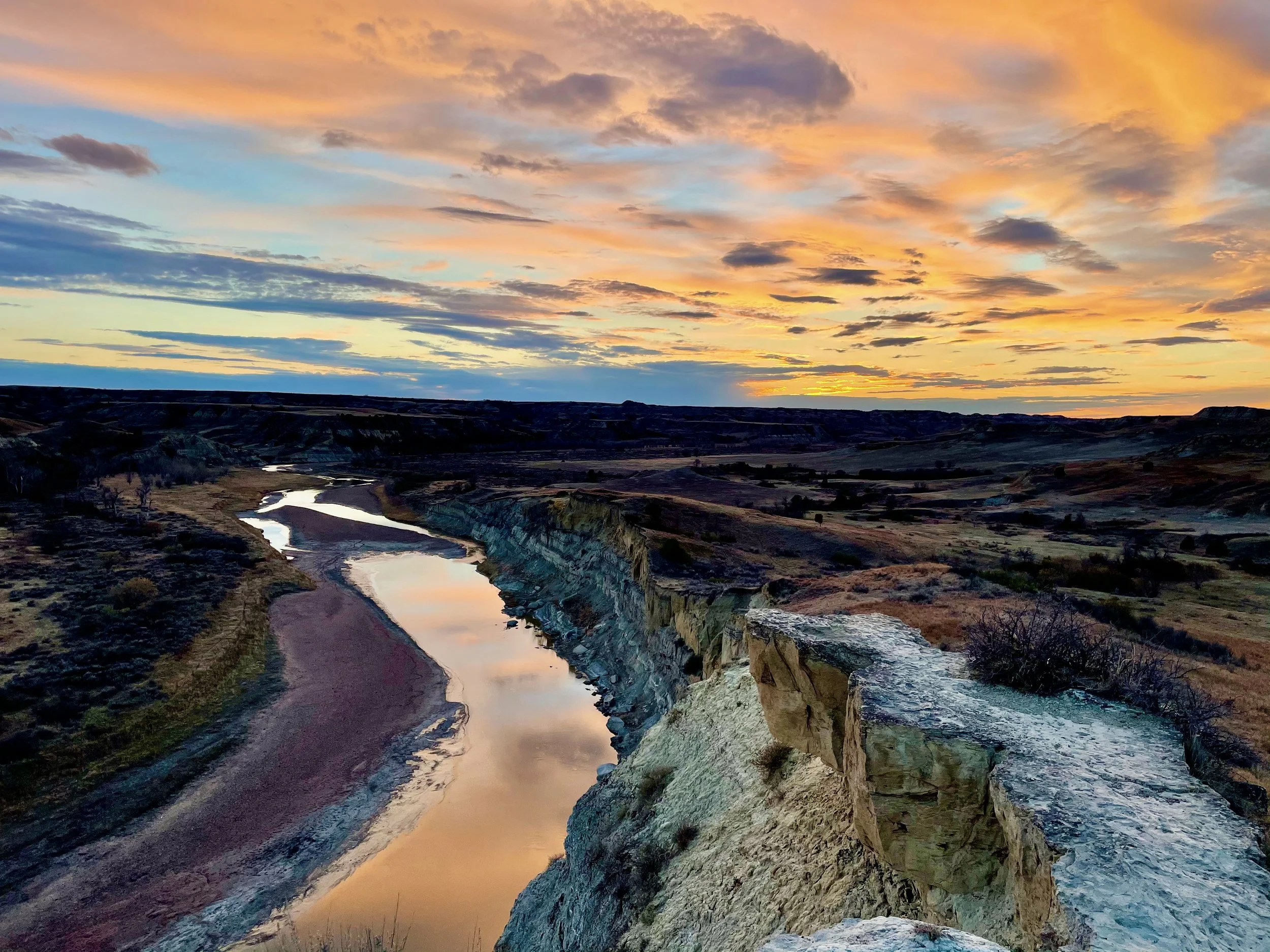
A note from BCA President Bill Knudson.
The North Dakota Badlands have significant scientific and ecological interests as well as paleo and cultural treasures. The oldest known cottonwood tree in the world is located in the North Unit of Theodore Roosevelt National Park. We value the night sky above the Badlands and are concerned with measurably increased light pollution in the past thirty years. We commend the staff of Theodore Roosevelt National Park for their Dark Skies Initiative and programming, which has been in place for many years. Much more about our knowledge of the Cretaceous-Paleogene (K-Pg) Impact Boundary and other paleo resources can be found at the North Dakota Heritage Center (including the website of the State Historical Society of North Dakota).
For us, the Badlands of North Dakota are a spiritual place. Essentially, spirituality is a knowing, a feeling, a sense of something beyond and greater than one’s self that cannot be defined or explained—it is a mystery. A sacred mystery, based in the reality that there is something much larger and greater that calls and requires seeking. Places of solitude and beauty are necessary to the process. Retreats are necessary to recreate. Recreation leaves us in a more knowing place, and over time promotes growth and an inner peace. This was known ages before the modern settlement of North America and is a worldwide phenomenon, spanning all cultures. Richard Louv, the author, says that we, especially children, have “nature-deficit disorder.” Not being connected to nature periodically has negative effects. Louv suggests that it can negatively impact physical, mental, and emotional health. Spiritual health should be added. The late Pope Francis described our earth as our Sister, Mother Earth (Canticle of St. Francis), based on the man who was his namesake, Saint Francis of Assisi. His opening lines from the Laudato Si: On Care of Our Common Home quote Saint Francis, from Section 2 of Laudato Si’ Mi’ Signore:
“This sister now cries out to us because of the harm we have inflicted on her by our irresponsible use and abuse of the goods with which God has endowed her. We have come to see ourselves asher lords and masters, entitled to plunder her at will. The violence present in our hearts, wounded by sin, is also reflected in the symptoms of sickness evident in the soil, in the water, in the air and in all forms of life. This is why the earth herself, burdened and laid waste, is among the most abandoned and maltreated of our poor; she “groans in travail” (Romans 8:22). We have forgotten that we ourselves are the dust of the earth (cf. Genesis 2:7); our very bodies are made up of her elements, we breathe her air and we receive life and refreshment from her waters.”
The encyclical goes on to quote his predecessors in statements made in their Encyclicals, Statements or Writings: Pope John XXIII, Pope Paul VI, Pope John Paul II and Pope Benedict XVI. In 1971 Pope Paul VI referred to the ecological concern as a “tragic consequence” of unchecked human activity: “Due to an ill-considered exploitation of nature, humanity runs the risk of destroying it and becoming in turn a victim of the degradation.”
These scholars and spiritual leaders are sounding an alarm. Our society is sleeping. These are not the first to ring the bell as we have commercialized large tracts of America’s wilderness, robbing our society of necessary healing places. Noted author Wayne Dyer said, “We are spiritual beings having a human experience.” He is saying our life on earth is limited. We have a reason for being here and eventually we leave this place, but our spirit is eternal. Time on this planet is an experience but not our essence. Nature is our home, our life force during our visit here and sustains us physically and spiritually. These wilderness places—places like the North Dakota Badlands—have been sacred and sought out for spiritual reasons by peoples inhabiting this part of the planet for 10,000 to 12,000 years. Protecting these places, being stewards of the few remaining wilderness areas so that our grandchildren and their children can retreat to a place largely unchanged except for the natural workings of wind, water, and time, should be a national priority. Ah, that they can see these Badlands as our parents and grandparents once saw them.
Theodore Roosevelt knew this, as did so many people with sufficient vision to understand the importance of solitude:
Being in awe with our Creator’s work.
Offering respect and gratitude for all the earth gives without taking too much.
Showing restraint against the idea that bigger is better, and that there is always a need for more.
Avoiding greed (avarice) and gluttony, two of the Seven Deadly Sins driving the human spirit instead of saving and preserving in love and caring for our fellow travelers.
If we do those things, 500 years from now, those who follow can savor in gratitude that small portions were protected, and will be thankful that those who preceded them had foresight that left these places to be treasured and perpetually passed forward.
Theodore Roosevelt came to the Badlands the second time after losing his wife and mother on the same day. He was broken. The lands along the Little Missouri River provided him the “arena” to heal, to become a leader. The land he walked continues to provide people with a place to experience emotion and physical challenge. He created similar sanctuaries throughout the United States—a legacy that continues to feed us. There is a need to build on this legacy—more shrines to counteract the bustle, noise, and stress created by life in the 21st Century. At the very least we need to slow, and then stop, the loss of wilderness. The task ahead of us requires perseverance, diligence, and much hard work.
A Message from the Executive Director
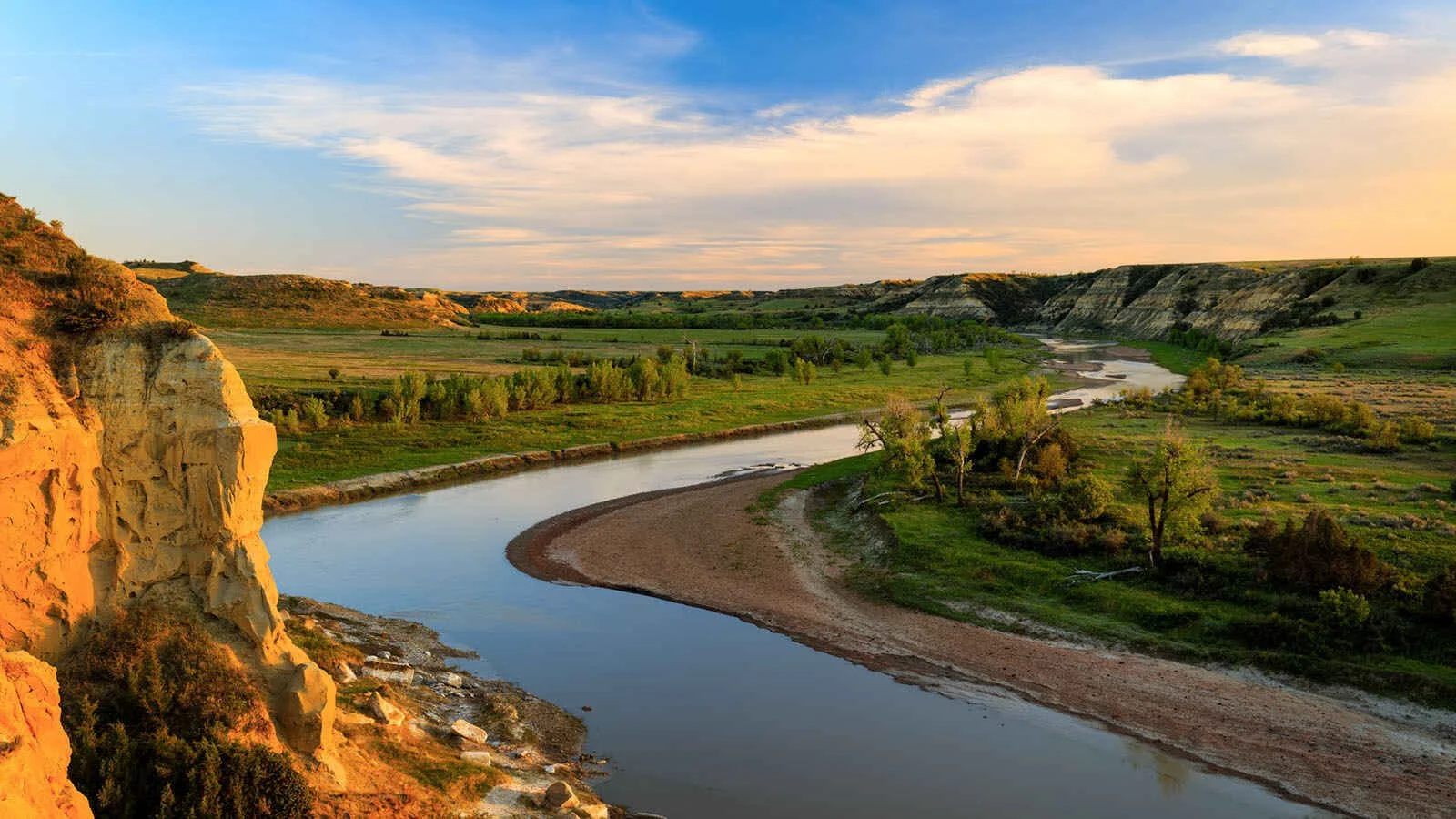
The Badlands of western North Dakota stand at a crossroads. These rugged landscapes—etched by time, wind, and water—hold ecological, cultural, and spiritual value that extends far beyond their boundaries. Yet today, they face mounting pressure. Expanding oil and gas development continues to fragment habitat, strain infrastructure, and industrialize once-quiet horizons. Increasing proposals to draw water from the Little Missouri Scenic River threaten the lifeblood of this semi-arid region, placing wildlife, ranching, and recreation at risk.
At the same time, development near Medora and surrounding areas is steadily eroding one of the Badlands’ most irreplaceable resources: its dark night skies. Light pollution creeping toward Theodore Roosevelt National Park diminishes not only visitor experience, but also disrupts wildlife patterns and obscures a vanishing natural heritage. Meanwhile, the integrity of the Little Missouri National Grasslands—critical buffers and biodiversity strongholds—is being chipped away, reducing resilience in an already fragile ecosystem.
Looking ahead, new pressures loom. The rise of energy-intensive data centers and the prospect of rare earth mineral extraction could further tax limited water supplies, increase land disturbance, and accelerate industrial footprints across the region. Without careful planning, these emerging demands risk compounding existing stresses on a landscape that cannot easily recover.
In a fast-paced, consumer-driven culture, the Badlands offer something increasingly rare: space to slow down. They invite us to step away from screens, to reconnect with silence, stars, and the rhythms of the natural world. Protecting this place is not only about conservation—it is about public health, well-being, and preserving opportunities for future generations to experience the same sense of wonder we have known.
The choices made today will determine whether the Badlands remain a refuge or become another casualty of unchecked growth.
Please consider helping us preserve this sacred place by becoming a member/donor of the Badlands Conservation Alliance. You will become a voice for wild North Dakota places. We need your help.
Sincerely,
Shannon Straight
BCA Executive Director
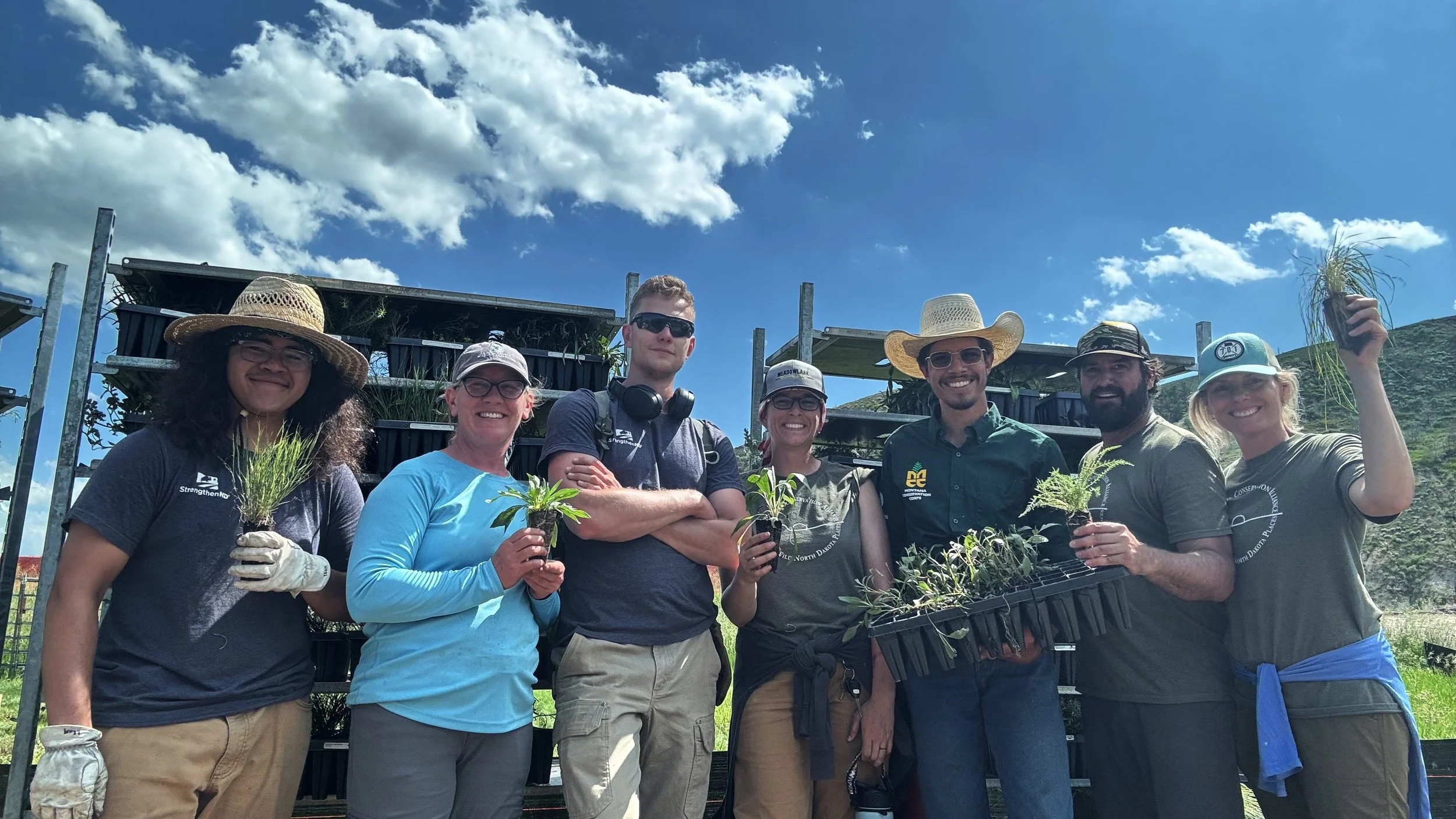
Badlands Conservation Corps
In 2025, the Badlands Conservation Alliance started the first conservation corps to be based in North Dakota since the 1930s, when the Civilian Conservation Corps worked on statewide projects. The Badlands Conservation Corps (BCC) AmericCorps field crews complete service projects in the ND Badlands by working alongside federal partners (the US Forest Service and Theodore Roosevelt National Park), and with the Mandan Hidatsa Arikara Tribal Park, as well as with conservation partners that include the ND Natural Resources Trust and the ND Wildlife Federation. Please consider donating to BCA as we advocate for and provide boots-on-the-ground solutions for future generations. Thank you!
Join Badlands Conservation Alliance or renew your membership by donating.
Join BCA and express your Voice for Wild North Dakota Places. Membership in Badlands Conservation Alliance entitles you to regular editions of Wild Badlands, the BCA newsletter; notices of BCA events, programs, and outings; alerts to relevant public meetings and actions; an opportunity to share your affinity with the western North Dakota landscape.